In the New York Times, Nick Bilton describes his dilemma as he moves to a new city; what to with all his books. “What’s the point if I’m not going to use them? I have digital versions now on my Kindle,” he asks. “If I was talking about throwing away my CD or DVD collection, no one would bat an eyelid.”
The latter is probably true; but if he’d been talking about a collection of vinyl records, eyelids would bat like Stuart Broad with something to prove. Maybe I’m showing myself up – like Roger Ebert – as an analogue diehard, but might it be the case that when we can get hold of stuff by digital means, whether by downloading it or ordering it from Amazon, it ceases to mean that much; and is thus easier to jettison?
(That said, this post is based on a conversation that began on Google+, so maybe I’m not as analogue as I make out.)
Marshall McLuhan was born 100 years ago this month. Here’s self-confessed McLuhagnostic and analogue native Roger Ebert to provide a personal/historical perspective – with the help of a couple of Russians – on MM’s “rearview-mirror” concept of the social and technological environment:
I grew up in a world of books, magazines, radio, black & white television, and movies that were shown in movie theaters. I was well enough established in that world that it created an “invisible environment.” It never occurred to me that there was anything new about those forms of media. When Gorky saw the first silent films, he called them “the Kingdom of Shadows,” and added: “If you only knew how strange it is to be there.” When Tolstoy saw a movie for the first time, he said: “You will see this little clicking contraption with the revolving handle will make a revolution in our life – in the life of writers. We shall have to adapt ourselves to the shadowy screen and the cold machine.” He rather liked movies. “The cinema has divined the mystery of motion. And that is its greatness.”
Have you ever (have I ever?) given much conscious thought to the fact that movies move? The very term “motion picture” was coined in a world in which pictures did not move. Yet within a few years after Gorky and Tolstoy saw the first films, Charlie Chaplin was the most famous man in the world, and nobody gave it a moment's thought. The invisible environment had changed to accommodate a new kind of visibility.
...everything that’s already in the world when you’re born is just normal; anything that gets invented between then and before you turn thirty is incredibly exciting and creative and with any luck you can make a career out of it; anything that gets invented after you’re thirty is against the natural order of things and the beginning of the end of civilisation as we know it until it’s been around for about ten years when it gradually turns out to be alright really.
The consensus seems to be that Jonathan May-Bowles, aka Jonnie Marbles, the man who tried to liven up the Murdochs’ appearance before the Culture, Media and Sport committee is something of a berk, a wally, a twunt and possibly even worse. A few conspiracists have even argued that he has to be in the employ of News International, because his intervention provoked sympathy for the embattled Rupert (who of course would then deny having anything to do with him, and he certainly didn’t pay him).
The language used to cover Marbles’s contribution is interesting: most hacks have reported the empirical reality that his weapon of choice was “a paper plate of shaving foam” or words to that effect. Had it been defined as a pie or a tart – since, after all, shaving foam is the main constituent of the pies that a circus clown might fling, although you have to let them stand for an hour or two to get the sting out – the attacker might have been seen as a confrère of the heroic Noël Godin (aka Georges Le Gloupier) the Belgian entarteur whose victims include Bill Gates, Nicolas Sarkozy and Jean-Luc Godard.
Those who criticise Marbles suggest that his activities distracted from the bigger story, the ritual inquisition of those ultimately for the hacking scandal; the Labour Party has primly suspended his membership. In reality, with the exception of the redoutable Tom Watson, the committee’s questions were pretty bland, and I’m pretty sure that at one point Murdoch Senior actually nodded off. Marbles is on the naughty step, not because he attacked Murdoch, but because he implicitly attacked the whole rotten system that implicates politicians, police and media, smug pigs with their expensively manicured front trotters in the same trough. He’s in trouble not for what he did, but for what he meant. And the fact that his Twitter following rocketed in the minutes after that sublimely “WTF?” moment should also raise a question mark or several with regard to the shallow, transient celeb culture that the Murdoch press has helped to foster over the past few years.
Which is not to insist, of course, that he isn’t still a bit of a twunt.
It’s been argued that there’s no such thing as bad publicity, but the phenomenon of organisations deliberately creating negative stories about themselves would appear to be a relatively new one. It started in a small way with food manufacturers releasing made-up stories that they planned to modify or do away with treasured brands (such as Vegemite iSnack 2.0) and comic publishers killing off beloved characters, or just threatening to do so, as has happened to everyone from Superman to Desperate Dan; the latest victim of this trend being poor old Spider-Man. The only risk is that devoted fans won’t be quite as outraged as was expected, and a valuable property will be sacrificed in ignominious obscurity; or, more deliciously, they’ll have to go through with a move that they never intended to execute in the first place, because consumers don’t tell them not to.
Virgin took things to a new level in early 2009 when they released a letter complaining about the standard of their in-flight catering, although they rather gave the game away by having the letter begin “I love the Virgin brand”, thus immediately identifying the author as an advertising executive; real people don’t love brands, or if they do, they’re not aware of it. But things have really kicked off in the past few months, when Simon Cowell got in on the act: first with the whole Cheryl in the USA saga; and then the distinctly fishy e-mail that essentially accused Cowell of grooming a contestant on Britain’s Got Talent. And this week we have the “news” that the dating website beautifulpeople.com has accidentally allowed 30,000 uglies onto its books, and has had to kick them off again. Cue outrage from those who believe that beauty lies within: cue free publicity.
I just think it’s odd that high-profile entities are paying good money to concoct unpleasant stories about themselves at the same time that certain high-profile individuals are also shelling out in order to quash such stories. And I wonder if it’s not beyond the realms of possibility that one or more of the stories that are being suppressed by injunctions (super or otherwise) might turn out to have been entirely concocted as well.
An actor involved in one of these super-injunction thingummybobs has – according to The Sun, at least – confessed all to his wife. Which strikes me as odd, because the man’s identity, along with that of the footballer and the other actor and the comedian and the chef, has been all over the web, and has even made it into mainstream media, albeit in the form of terribly coy, nose-tapping innuendo. If his spouse didn’t at least suspect that something was up, surely one of her friends must have twigged. I don’t want to kick her when she’s down, but she must be a terribly incurious woman.
You see, the whole point of these injunctions is not to stop people knowing about the moral mishaps of the rich and famous: it’s to stop the *wrong* people knowing. And this is something that goes way back. The Abdication Crisis of 1936 gripped the attention of the British masses once it became public, but the upper classes had known all about Edward’s unsuitable girlfriend for some time, and had been happy to gossip about the constitutional ramifications, provided the hoi-polloi didn’t know what was going on. Such information might create havoc, weaken their moral fibre, don’t you know?
I first got came to understand this social distinction in the world of celebrity tittle tattle in the early 1990s, at about the time it was beginning to fall apart. I’d started my first proper job, in a legal publishing company, which meant that I was for the first time operating in close proximity to people who knew where the bodies were buried. I got wind of Paddy Ashdown’s tarnished halo some time before The Sun splashed it, and also heard some startling rumours about a couple of then-Cabinet ministers. These were pretty analogue days, so the tales were literally word-of-mouth. But I was standing by the fax machine when the Camillagate transcripts came over from Australia. Technology had done away with the social apartheid of gossip, to extent that even after the injunctors have joined Andrew Marr in realising the sheer daftness of their position, they will be remembered not for illicit shagging, but for using their wealth and status to hush up said shagging, which looks far, far worse.
Camilla herself was doubtless embarrassed by the publication of her phone messages, but she realised she could do little about it. So she backed off, bided her time, and is now the Duchess of Cornwall. And she’s making speeches lauding the freedom of the press. Maybe one day [REDACTED] and [REDACTED] and [REDACTED] will do the same.
PS: Osama’s mansion/compound apparently had no internet access, to avoid attracting attention from US intelligence: in the end, this very anomaly was one of the things that attracted their attention. If he’d got broadband, but only used it to look at old Dr Who clips on YouTube, he might have got away with it.
PPS: It’s come to my attention that if you Google “osama bin laden what really happened” at the moment, this post appears on the first page. If that’s how you came here, welcome! Feel free to have a look around. Let us know what you think. Fancy a cup of tea, maybe a custard cream? And, um, yes. Terror of the Autons. Sorry about that.
PPPS: OK, if you do want something a bit meatier, here’s DE Wittkower’s splendid piece on the role of social media in the search for Osama; and here’s a slightly more depressing roundup of some of the Facebook responses to the big news; and here’s evidence that dead-tree media hasn’t been doing that much better.
The way the media works these days, facts often spend some time in a Schrödingeresque limbo, true but not quite true, in a box made of Twitter and Facebook, digital winks and innuendo, before they’re finally confirmed by the official channels. So I woke up to the line “R.I.P. Poly Styrene” and hoped for hours that the X-Ray Spex frontwoman, the Patroclus of punk rock, hadn’t squawked her last, although it was well known she’d been very ill in recent months. Sadly, it’s true. The sadness is amplified by the fact that she’d only just released a new album, her first in several years. But who would have thought, back in her heyday, that she’d outlive Woolworths...
Two recent responses to the increasing levels of rudery in our public discourse: the Daily Telegraph’s Neil Midgely informs us of the contextually justified “fuck”s that will pepper a forthcoming Radio 3 adaptation of Wuthering Heights, inevitably prompting (profanity-free) outrage across the breakfast tables of middle England; and in the New York Times, Jon Pareles notes that three songs in the Billboard Top 10 (by Cee-Lo Green, Enrique Iglesias and Pink) are similarly blessed, although the precise volume of soy latte being spat out in Manhattan is not recorded.
The problem in both cases is that the journalists in question find themselves unable to spell out the word that provoked the articles in the first place: presumably this is down to the policies of the papers that employ them. Midgely opts for the tedious “f-word”, and then resorts to “[blank]” when discussing Emily Brontë’s own self-censorship, although it’s not clear which words these blanks are replacing. Pareles is more eloquent, referring to “variations on a familiar, emphatic, percussive four-letter word.”
Of course, in writing around such unmentionables, both writers are faced with a paradox: readers who aren’t familiar with the word in question will be utterly baffled by the article; those who know it and aren’t bothered by it would have been relaxed if the veil of good taste had been lifted; and those who do know the word but don’t like it being used will have been reminded of its existence even if they haven’t read it. Pareles for one is aware of the ridiculousness of the situation:
Even if the original lyrics are off-limits to old media, it’s clear to everyone that the profane versions of the songs are going to be heard. The enforced innocence of broadcasting is no longer a cultural firewall; it’s barely an inconvenience.
There’s a debate to be had about whether old media should give in to the barbarians, or instead maintain their decorum and thus demonstrate why in a multi-channel universe, the Times and the Telegraph and Top 40 radio are still special. As Pareles suggests, this is part of a wider question, of what newspapers and other mainstream providers are really for these days; does it still matter that they’re maintaining standards if nobody else gives a fuck? Not to address this is just f–––ing while Rome burns.
Jay Rosen at SXSW on Saturday, trying to heal the rift between bloggers and legit hacks, announced: “It’s one internet. The news system now incorporates the people formerly known as the audience.”
Which is all well and lovely, but if the audience isn’t the audience any more, who are we talking to?
Something I posted in response to the reponses to Neal Gabler’s piece in yesterday’s Observer about whether the interwebs killed the critical star.
The democratisation of critical opinion has forced us all to make use of our own critical faculties, applying them not just to cultural product – books, movies, music, restaurants, etc – but to criticism itself. We might see 20 or 2,000 different opinions on the same work, so we have to ask ourselves who the most convincing, persuasive arguers are. Do they seem to have a modicum of knowledge about the subject? Do they understand the cultural/political context in which the work was created? Do they put together a coherent argument (why a poem or record or souffle is good or bad) or do they just say that they loved or hated it? Can they spell?
Critics employed by mainstream media are perfectly capable of competing in this bearpit, but they have to understand that they will be judged on their own merits. The vicarious self-branding that comes from being on the books of The New York Times, the BBC, The Observer etc no longer carries so much weight. You have to convince us how good you are, just as authors and film-makers and musicians and chefs have to convince you.
It didn’t get much of a response there, possibly because of the absence of come-hither pictures of Helen Mirren or Charlotte Rampling (or Anita Pallenberg or Princess Margaret or Yootha Joyce or whoever). Anyway, pretty soon after I’d posted it, I discovered a site called Poptimal, which in an apparent effort to distinguish itself from the cultural elite (which according to Gabler may no longer be an elite – do try to keep up at the back, there’ll be an exam later) claims to offer “Pop Culture Reviews From People Like You”. Which isn’t necessarily a bad thing, but neither is it by definition an entirely good thing either. What do you think? (Respondents must identify three distinct criteria in which they are People Like Me.)
And then I learned that the composer and mathematician Milton Babbitt had died over the weekend. It was Babbitt who wrote the notorious 1958 article “Who Cares If You Listen?” Although he claimed the provocative title was the work of an editor, it pretty much summed up his argument that if music was to progress, it would have to get difficult, demanding a level of commitment that not everyone might be able to muster. And with a few tweaks, the question applies to those who contribute to Poptimal, and those who chipped in to comment on Gabler’s article, and with a nod to the Tim Radford piece I mentioned in my previous post: Who Cares If You Write?
I was going to liven up your Sunday with a fairly long and convoluted post about how recent events have proved Marshall McLuhan right – how the process of transmitting information becomes the story – people focus on Wikileaks itself more than on the US spying on Ban Ki-Moon or Prince Andrew sanctioning corruption – tabloids blaming the BBC’s coverage of FIFA skulduggery for the failed World Cup bid, ignoring the skulduggery itself – and even as I type, I see someone complaining about a supposedly offensive Twitter hashtag, demanding that the complaint is RT’d, thereby managing to turn said unremarkable tag into a global trending topic. (Thinks: what’s the Thai for “D’OH!”?)
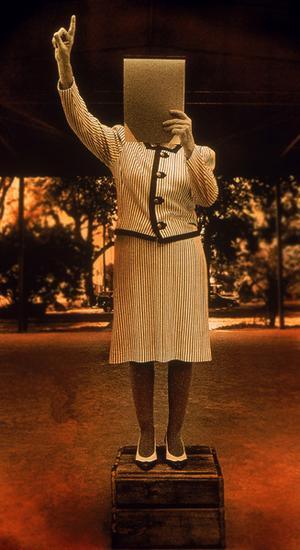
But I won’t, because all I want to do today is to share this picture with you:
Apologies for the incoherence of this post, and the fact that it’s cobbled together from thoughts I’ve expressed on various other media over the past 24 hours. It’s just that I’m rather surprised at the visceral rage provoked within me by the news that Prince William and Kate Middleton are now engaged. No, scrub that. I’m not angry that they’re engaged. I hope they have a pleasant wedding and enjoy their life together; they’ve never, so far as I know, done anything bad to me or mine. And if people want to have a day off and wave a few flags because two people they don’t know are getting hitched, well, it’s no dafter an excuse than the FA Cup final or Eurovision.
No, what’s really been pumping up my blood pressure has been the media coverage of the announcement, from the mid-market tabs’ attempting to shoehorn St Diana into everything, via the Waikato Times’s interview with someone who happens to be called K Middleton to Lady Antonia Fraser’s remark on Radio 4’s Today programme that Ms Middleton (Marlborough, St Andrews, offspring of millionaires) is “not privileged”. If, as the conspiracy nuts might suggest, the whole thing is a ploy to distract us from the utter shitbucket into which the world economy is falling, it’s a dismal failure. If we’re seriously looking at SIX MORE MONTHS of this twee banality, this crazed desperation to pump every spare crevice of our consciousness with vacuous, inane, royal-scented non-news, then for every fire extinguisher chucked off Millbank Tower there’ll be a newspaper editor and a couple of TV executives following it down to the pavement.
An awkward young man once said: “I used to be disgusted, now I try to be amused.” Sorry, but I’m still at disgusted.
I know I really shouldn’t get wound up by anything Janet Street-Porter says any more, especially if it’s published in the Daily Mail, but her latest diatribe about social media is just too idiotic to ignore. “Tweeting lets you think you’re important — it confuses activity with content,” she opines. Neglecting to consider, of course, how this distinguishes a Twitter account from, say, a column in the Daily Mail.
So the Times paywall, we are told, is a great success, or at least less of a disaster than some might have predicted. The problem is that, until one of its broadsheet competitors does something similar, there’s no sensible way to make a comparison. What most people agree on is that as newspapers become online entities with optional dead-tree add-ons, they can’t survive on income from advertising sales alone.
Part of the problem for media producers is that the move online has coincided with an increased sophistication and cynicism on the part of users towards advertising in all its forms. If we’re to be sold to, we want our intelligence flattered a little; and yet the form of online ad that’s most likely to grab our attention is the most irritating and patronising. Would you buy a car or a coat or an ice-cream if you associated it with the digital equivalent of an annoying insect that buzzes around as you try to read or watch or listen or shoot zombies or masturbate? Buy an Audi, because when your cursor goes too far to the right-hand side of your screen, the word “AUDI” jumps out at you! OK, maybe not.
Of course, if the Times’s subscription model really works out, they’ll be able to ditch those annoying ads, won’t they? Won’t they? Well, not if Thorne, on Sky 1 (another News Corp entity of course) is anything to go by. Punters may pay the Murdoch shilling for this pretty effective thriller; but they also have to suffer clunkingly intrusive product placement for Illy coffee and Apple computers. And it’s the same problem as with the online ads: if you don’t notice them, they’ve failed; if you do notice them, you start to associate the coffee and the laptops with having your quality time with David Morrissey ruined, and you buy Kenco or Dell instead. It’s a form of metafiction, except that it doesn’t just draw the viewer’s attention to the fact that Thorne is a drama, and the people throwing tantrums on screen are in reality actors; it also reminds you that the whole process is also a commercial entity. First of all, your suspension of disbelief is punctured, and then you’re expected to pay for the pin.
Even weirder is the moment when Jack Shepherd, as Thorne’s widowed dad, suddenly declares for no particular reason, “I’ve got Sky now, thank God.” Which is a bit like preaching to the converted, and at the same time telling them that God doesn’t exist.
I have a certain amount of time for Andrew Marr, but he really shouldn’t go around casting aspersions on other people’s physical appearances. Apparently he told an audience at the Cheltenham Literary Festival that:
...most citizen journalism strikes me as nothing to do with journalism at all. A lot of bloggers seem to be socially inadequate, pimpled, single, slightly seedy, bald, cauliflower-nosed young men sitting in their mother's basements and ranting. They are very angry people... OK – the country is full of very angry people. Many of us are angry people at times. Some of us are angry and drunk. But the so-called citizen journalism is the spewings and rantings of very drunk people late at night. It is fantastic at times but it is not going to replace journalism. Most of the blogging is too angry and too abusive. Terrible things are said online because they are anonymous. People say things online that they wouldn't dream of saying in person.
Perhaps Mr Marr ought to look in the mirror before popping anybody else’s pimples. Or, as I suggested at The Wall:
Clearly Sturgeon’s Law – “90% of everything is crud” – applies to blogging, but it applies to most other things, including mainstream journalism. Marr might like to kid himself that his profession is characterised by plucky foreign correspondents and dogged investigative reporters, but to be honest, that’s just a thin layer of cream atop a mountain of recycled press releases, parochial banality, celebrity tittle-tattle (much of it entirely invented; “a friend said…”), dog-whistle political shit-stirring, and the sort of un-researched off-the-top-of-the-head lifestyle columns (Liz Jones, Jan Moir, etc) that uphold all the worst qualities that Marr and friends ascribe to bloggers. Clear out your own back yard, first, Andrew.
Some time last year, I wrote a piece for LC’s short-lived but fondly remembered Pamphleteer, about the end of that remarkable generation of polymathic raconteurs (your Peter Ustinovs and your John Mortimers) who could be injected into a TV chat show, apparently with no preparation and, more significantly, nothing to sell. Only Stephen Fry carries on the tradition, and even he fails to keep up the second part of the bargain. In the comments box, Boz sensibly pointed out that I’d omitted Kenneth Williams from the list; but it’s only now that I come upon a pertinent remark by Williams himself, made appropriately enough on a chat show in 1987. On the subject of increasing specialisation, he said:
Everyone’s becoming better and better at less and less; eventually someone’s going to be superb at nothing.
Which inevitably makes one think of the likes of Katie Price and Paris Hilton, whose most obvious talent is for being themselves. But, honestly, can’t the same be said for Williams?
About the only bit of quantum theory I can really get my head around is the idea that observation affects results; that once the box is opened, Schrödinger’s cat is no longer in its dead/undead state, it’s one or the other.
So although we may have a desire to know, sometimes we hold back from investigating in case we affect the result, and thus become the story. In the aftermath of the Raoul Moat saga, there was much harrumphing about the Facebook page set up in his honour by one Siobhan O’Dowd; did tens of thousands of people really think this pink-faced slab of self-pity was really a legend? Well, possibly not. It’s been suggested that a good number – possibly a majority – of those who nominally ‘liked’ the page actually did so to tell the Moat fans what a bunch of idiots they were. And the more people who did that, the higher the number of apparent Moat fans rose. If you just wanted to find out out the relative numbers of pro- and anti-Raoulards, you still had to press the ‘like’ button, skewing the numbers still further.
There was a similar dilemma for those who wanted to find out how well the Times website was doing since it introduced its new paywall. It wasn’t simply a matter of not wanting to drop a few quid into Murdoch’s pocket; it was the knowledge that to take a peek would skew the statistics, making the reader part of the news. Of course, it would be harder in this case to be able to put a number on the readers, or indeed to distinguish between the merely curious and those actually willing to pay because they wanted to read the words and look at the picture. But one could get an idea of how successful the enterprise was by, for example, the number of readers appending comments to the latest Jeremy Clarkson article, presumably along the lines of “ROFL Jeremy Clarkson You Legend”. Incidentally, I’ve always been impressed by Clarkson’s use of metaphors that seem to imply that a car is a beautiful woman, and at the same time his own penis; a paradox that even Schrödinger may have struggled to explain.
And on a slightly different note (but back to Facebook), the tale of the Dr Pepper campaign that referenced the notoriously scatological 2 Girls 1 Cup film clip. The story broke on the tediously ubiquitous Mumsnet (of course it did) and immediately presented professionally disgusted news outlets with a dilemma of their own; how to communicate the depravity of the film under discussion, without actually naming it, or saying why it’s so depraved? The Telegraph had a go with a reference to “a hardcore pornographic film which is notorious for the obscene practices it depicts”, although one wonders what sort of hardcore pornographic film doesn’t depict obscene practices. And of course whether unhygienic but consensual behaviour should be a matter too disgusting to be discussed by the same media outlets that had been covering in forensic detail the activities of a murderous sociopath just a few days previously.
PS: David Hepworth also reflects on whether you can talk about swearing when you’re not allowed to swear.
A thought-provoking article by David Mitchell in today’s Observer. He argues that, whatever we might think of Rupert Murdoch and his deeds, the decision to impose a paywall on the Times and Sunday Times doesn’t deserve the opprobrium heaped upon it by bien-pensant liberals. Ultimately, it is important that a professional, independent, accountable news media exists, and by weaning consumers off the notion that information is free, Murdoch might be helping to ensure that. The alternative, Mitchell suggests, is to hand the whole process over to the blogosphere:
Not that there’s anything wrong with amateur bloggers – except that there’s masses wrong with thousands of them. While some of the stuff written for free on the internet is brilliant, a lot of it – probably most of it – is shit. For every badly written, offensive, incendiary tabloid column, there are hundreds of online opinions that are worse and contain even more lies – provable lies in many cases, but usually coming from someone whose anonymity or poverty effectively preclude their being sued. The press can’t stray too far from the truth or its legal bills get out of control.
The problem is, it’s not just about incendiary tabloid columns, the Littlejohns and the the Moirs, is it? It’s every article that’s nothing more than a rehashed press release, with no independent research or second opinion. It’s every disguised advertorial for the newspaper proprietor’s other products or for his political proclivities. It’s every narcissistic lifestyle column about how exasperating middle-class life in London’s more fashionable postcodes can be. It’s the remorseless encroachment of vacuous celebrity culture into areas that were once free from its sulphurous embrace. Just as with blogs, there’s masses wrong with thousands of them. Sturgeon’s Law, as ever, prevails; 90% of everything is crap.
But the most galling wrongness in this context is when articles are blatantly lifted from blogs and other online sources without attribution, because just as bloggers are too poor to be sued, they’re also too insignificant to be able to create waves when they’re the victims of plagiarism. For all that legitimate journalists complain about amateur media, many of them would find life considerably tougher without it.
There is much that is good about the mainstream news media. David Mitchell’s columns for one thing; he’s a clever, funny polemicist whose one-liners often make their point more cogently than any number of ‘proper’ journalists can manage. I don’t know how much he’s paid, but I’m sure he’s worth it. However, his conclusion, that “many people only really value something they’ve paid for” deserves rather more analysis than he gives it. It’s not just money that persuades consumers that something is better than it is; it’s an association with what many still perceive to be ‘real’ media – whether it’s The Times or The Observer, BBC or CNN, Angling Times or Kerrang! – that often persuades them that what they’re reading or watching or hearing is rather better than it really is.
PS: Meanwhile, Shane Richmond deals with the paywall side of Mitchell’s argument.
The news that the North Korean barmy army is in fact made up of Chinese actors, and that the Chinese are entirely open about the fact, shouldn’t really surprise us, especially after the gloriously brazen stage management of the Beijing Olympics. But it does raise the question of what purpose the fans – the ones who actually show up to the World Cup stadiums – actually serve.
Clearly, at this exalted level at least, the revenue from ticket sales is pretty much negligible when compared with TV and sponsorship money. Look at the case of the 36 orange-clad lovelies who were ejected from the Netherlands-Denmark match; the objection was that they appeared to be indulging in a spot of ambush marketing on behalf of a beer brand that wasn’t one of FIFA’s approved ‘partners’. The fact that they got in thanks to Robbie Earle’s ticket allocation seems to have been little more than a minor irritation to the tournament’s organisers, and it was down to his employers at ITV to discipline him. Surely we can infer from this that FIFA is more concerned about upsetting Budweiser than any legitimate Dutch or Danish fans who couldn’t get in?
And yet, at one level, FIFA needs fans at the grounds. They provide the atmosphere, the noise, the excitement that enhances what has, for the most part, been a pretty uninspiring tournament so far. And the TV viewers tend to agree; they refuse to dampen those vuvuzelas with the mute button, not because they’ll miss the inanities of the commentators (see here for a particularly savage indictment of the sheer crapness of TV pundits) but because they feel there’s something weirdly sterile about watching millionaires playing badly in silence.
This doesn’t just apply to sporting events, of course. With a few exceptions, most comedy and game shows on TV and radio are still recorded in front of a live audience; supposedly, it makes the armchair viewer feel more involved in what’s going in the studio. And yet, anybody who’s been in the studio while one of these programmes is made knows that the experience can be deeply frustrating and tedious, with constant glitches, hold-ups and retakes. The most enjoyable bit is often the warm-up person who’s sent out to distract the punters from thoughts of mutiny during these pauses; and the TV audience doesn’t know he even exists. Moreover, if the show being made isn’t particularly established or popular, it’s quite feasible that a large chunk of the audience has no idea what it’s about or who’s involved until they’ve taken their seats. Several American sitcoms used to be prefaced with the boast that they were “recorded in front of a live audience” because that reassured TV viewers that they weren’t listening to canned laughter. But the live audience is prompted and chivvied and prodded to give the desired response; and if they don’t come up with the goods, the producer can always tweak the recording afterwards, to make them sound more enthusiastic than they really were.
Which takes us back to those TV viewers, who almost feel as if they’re there because of the ooh-ing and aah-ing and paaaaaaaaaaarp-ing coming from the flatscreen. But if they know that a good proportion of the noise comes, not from diehard supporters of the teams involved, but from actors hired by the Chinese authorities, or models hired by a Dutch brewery, or friends of friends of a bloke who used to play for Port Vale, will they still want to play along?