Showing posts with label USA. Show all posts

Monday, October 3, 2011

The word


It takes a supreme effort to do anything that might make me feel sorry for the ghastly Texas governor Rick Perry, but his rival for the Republican nomination Herman Cain has managed it. Apparently Perry’s family once rented a hunting lodge that we will describe as N-----head, so as to spare the blushes of those who dislike the word “nigger”. (And as a mark of my equal opportunities policy when it comes to verbal offensiveness, “Paki”, “yid”, “cracker”, “faggot”, “fuck”, “cunt”, OK?)

Cain, who is black, and made his fortune from unpleasant pizzas, has declared that there is “no more vile, negative word than the N-word” and I can see how an association with the grotesque process of lynching must make it seem that way; but surely such vileness must attach itself to “rope”, “tree”, “torch” and “mob of inbred bigots” as well. And in any case, the Perrys took action to paint over the offensive word where it appeared on the property; although they didn’t do it immediately, and apparently it was still visible under a coat of white paint this summer. So it’s not really racism or insensitivity for which Perry is being hounded, but sloppy editorial protocols. On second thoughts, the guy deserves everything he gets.

Sunday, September 11, 2011

9/11: I never could get the hang of Tuesdays


A couple of years back, I wrote a book. Maybe you noticed me mention it. Did you read it, or at least buy it and mean to read it? Some people did, which was nice. It’s still available by the way; as far as I know, no copies were looted. Anyway, it was a book about the Noughties, and as such, there was rather a lot in it about the events of September 11, 2001. Indeed, it’s probably fair to say that I cast 9/11 as the main character in the drama of the decade, the point around which everything else revolved. Which is hardly a radical piece of historical revisionism, but almost as soon as the book had gone off to press, I began to have my doubts. A few years before, I’d written a piece for The Guardian about the way that, post-9/11, the slightest disturbance in New York City seemed to trigger alarms in editorial offices in all corners of the world, even if it turned out to be caused by a common-or-garden accident; so a plane crash in NYC that kills two people is the headline in Le Monde, edging out a train crash in France that had killed 12. But in writing the book, I’d put my scepticism to one side, and worked within the mainstream, Applecentric perspective.

But it still niggled: was this agenda really viable? Was 9/11 really the lynchpin of the decade, for everyone from Beijing to Bamako? Were the 230,000 people wiped out by the 2004 tsunami really a smaller blip on the decade’s radar than the 3,000 who died in the terrorist attacks? In some of the articles I wrote to tie in with the book, I did try to raise the possibility that the overwhelming significance of 9/11 was a question of geopolitical perspective, but I really didn’t have the courage of my convictions. (I hope, however, that I’ve earned a little kudos for linking the phrase “false dawn” to the election of Obama.) Anyway, multiple brownie points to David Rothkopf, whose Foreign Policy article identifies 10 – T*E*N! – things about the past decade that were bigger than 9/11.

Also: the late David Foster Wallace, in 2007, tells the truth by asking questions; Rupert Cornwell on a wasted decade; Blackwatertown offers the journalist’s angle; Mrs Peel checks out the visuals; and Christopher sums up everything so neatly and sweetly that I don’t know why the rest of us bother.

But I will anyway. Since everyone’s been pitching in with their where-were-you-when story over the past few weeks (we’re all Zapruders now), I’ll bore you with mine one last time. I was in the British Museum, which had a small display dedicated to the work of the architect Norman Foster. I was particularly interested in the Millennium Tower, a projected development in Tokyo which, had it been constructed, would have been the tallest building ever. To give some idea of scale, they put the model alongside simulacra of about a dozen other buildings that had been, at the time of their construction, the tallest in the world, going back to the Eiffel Tower. So, when I got the call telling me that the first plane had hit (I seem to remember the news of the second strike coming while I was looking for a pub with a telly) I was standing over a model of a building that never was, and a couple that very soon wouldn’t be.

(The image above is an Indian pharmaceutical ad from around 2003, courtesy of Gothamist. And below is a place where the towers still stand.) 

Saturday, May 7, 2011

Trump, Osama and the postmodern presidency

All modern politicians are, to a greater or lesser extent, simulacra. The important thing is not what they are, or what they do, or promise to do: we choose to elect or reject them because of what they mean, what they represent and reflect. Barack Obama is a classic example of this, entering the White House as a physical embodiment of hope, change and a vague aspiration towards a post-racial America that aspired to redemption from the past few centuries of slavery and prejudice. The persistent criticism levelled against him since he won the 2008 election – and not just by his political opponents – is that he has remained content to be rather than do, to offer a succession of plausibly hopey-changey soundbites in place of coherent policy and action.  His Nobel Peace Prize was effectively awarded for Not Being Another Old White Guy. As was said of Lord Kitchener, at least he made a good poster.

But then, in the past couple of weeks,  Obama started to do things, or so it seemed. His first act was provoked by the claims from Donald Trump that he had not been born in the United States and as such was not eligible to be President; Trump’s campaign was of course a continuation of the so-called birther movement, that had been making similar insinuations since before Obama had been elected. Again, he was criticised for his inaction: if he really had been born in the USA, why didn’t he just come up with the relevant slip of paper? In fact, Obama was playing a political version of Muhammad Ali’s rope-a-dope against George Foreman in 1974, soaking up the punishment in the knowledge that he was in possession of the killer punch. Or was it? After all, the die-hard birthers will continue to insist that the certificate Obama produced is a fake. And even those of us who are not members of the deranged wing-nut community have to admit that the certificate is just another simulacrum, a paper representation of an event that came and went nearly 50 years ago, and as such can never be regained.

All that paper became irrelevant when Obama announced that Osama bin Laden was dead, provided you didn’t believe that he’d died four or nine years ago, or that he had never existed at all. Many of those that chose to take the news at face value began USA!USA!USA!-ing in Times Square, but the story soon turned out to be about yet more simulacra, as the White House pondered whether we’d be allowed to see images of the body. Of course, any such image would inevitably have been dismissed as a fake – there had already been a bad fake doing the rounds, just to test the waters – while at the same time being dismissed as triumphalism on the part of Americans. The closest we could get to reality was a shot of Obama and his team watching the action taking place in Abbottabad, but it subsequently transpired that this was a fake as well, or a dramatic reconstruction, whichever is the closest. And in any case, even if we were to see a convincing, authenticated representation of Osama’s body, by the time we saw it the alleged subject of the picture would have been feeding the fauna in the Indian Ocean for several hours, just another event beyond the scope of representation, beyond any notion of truth or reality.

Saturday, April 16, 2011

Wretched refuse


The US Postal Service has inadvertently issued a stamp depicting the fibre-glass simulacrum of the Statue of Liberty in Las Vegas, rather than the original. But this hasn’t provoked the outrage one might have expected, according to the New York Times.

“Wouldn’t anything be a replica anyway?” asks firefighter Doug Jessup, demonstrating a pretty good grasp of the Baudrillardian fundamentals. “It’s still only a picture, a representation in any case.” But it’s the response of 21-year-old Alex Henes that will most depress anyone who has pored through a Stanley Gibbons catalogue. “It’s a stamp to me,” he says. “We’re not the snail-mail generation; we’re the ‘e-mail, get it out as quick as you can’ generation. If it was 50 years ago, I would take issue with it.”

PS: Mrs Peel directs to some incisive comments from Times readers.

Sunday, April 3, 2011

Silly point

Joseph O’Neill’s novel Netherland (2008) tells the story of a New York-based Dutchman whose marriage unravels in the aftermath of 9/11, and who attempts to pull himself together by joining a cricket club in Staten Island. Barack Obama  apparently thought it was very good, and so do I. It would be more than a little trite to describe Netherland as a novel about cricket; but at the same time, without cricket there wouldn’t really be much of a novel. So I was a bit surprised when I saw a US paperback edition of Netherland in a Bangkok bookshop the other day, and noticed that there was no reference to cricket anywhere on the cover. Not even an opportunistic World Cup tie-in...

OK, so most Americans don’t get cricket, despite the fact that the first ever international match was played on US soil, so it was probably a hard-headed decision on the part of the publishers, who reckoned that nobody would buy a book that involved a sport they barely know exists. But would a British publisher bring out an edition of The Natural by Bernard Malamud with no indication that it might contain stuff about baseball? Or Jim Carroll’s The Basketball Diaries with the title erased...

(The image is of the mighty Bart King, the greatest American cricketer of all time, who in his last tour of England, in 1911, took 87 wickets at an average of 11.01. Which, for the benefit of my lovely American readers, is rather good.)

Friday, May 1, 2009

Antonin Scalia is a monkey fighter and he can suck my lozenge

It’s not often I find myself rooting for the Murdoch empire, but when it comes to Fox TV’s challenge to the US Federal Communications Commission policy on swearing, I’m in the same corner as nasty old Rupe.

Essentially, in the wake of St Bono offering up a wee swearie at the Golden Globes in 2003, the FCC elected to operate a zero tolerance policy against bad language on network TV. This extends even to so-called “fleeting expletives”, usually unplanned, unscripted moments on live TV when an inadvertent flip or blimey slips out, the verbal equivalent of Janet Jackson’s nipple. And now the Supreme Court has voted 5-4 to uphold the Commission’s judgement.

The most vociferous of the anti-rudeness judges is the charming Antonin Scalia, who suggests that references to “sexual or excretory activities” trump any footling need to uphold the First Amendment. Now, I’ve never quite understood what’s wrong with sexual or excretory activities. I’m not sure where Justice Scalia thinks his nine children came from: maybe the stork brought them; maybe the same stork then removed all his bodily wastes when he wasn’t looking. But personally, given the choice between Scalia’s bumptious primness, and a clapped-out rock star saying “fuck”, I know which one I find obscene. The only good thing about the man is his passing resemblance to the Angelo Muscat (the butler in The Prisoner).

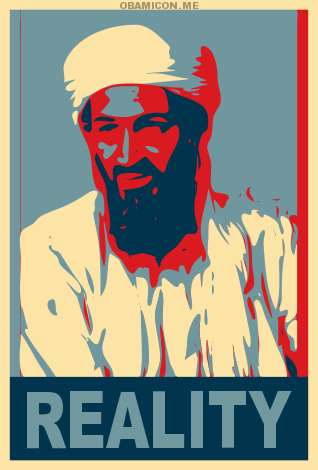
And without resorting to sneering generalisations, I think it’s useful to point out that on British television, this is a joke; in the States, this is reality.

Sunday, April 5, 2009

Hey, hey LBW

Just finished Joseph O’Neill’s Netherland, which is about many things – marriage, masculinity, mid-life crises, migration – but above all about the barely visible subculture of cricket in New York. O’Neill describes it as a post-American novel: as the dust of 9/11 refuses to settle, a hodgepodge of immigrants indulge in a pastime that’s almost as alien to the American psyche as Marxism or not liking apple pie. (Although, as one character points out, cricket was played in New York in the 1770s, and the first international sporting events were cricket matches between the USA and Canada, in the 1840s.)

I think I’m reading it at exactly the right time. America may not yet have ceded the 21st century to China and India at the G20 summit, but Obama’s presence at the G20 summit struck a new tone of humility. Meanwhile, Afghanistan responds to its prolonged occupation not by opening McDonalds and Starbucks in Kabul, but by moving inexorably towards a place in the next Cricket World Cup.

Cricket becomes the signifier of not-Americanness; the next step will be America meekly submitting to its charms. And the conclusive sign that the American hegemony is over will be President Paris Hilton bowling the first googly of the 20/20 World Series.

Tuesday, March 31, 2009

The virtues of shelf-reliance

I’ve been doing some research that involves skimming a representative selection of American pop polemicists from the past 10 years, and it seemed pretty zeitgeisty (straitened global circumstances and all) to start in the second-hand bookshops. Oddly, there were loads of lefty tomes (Michael Moore, Al Franken, Naomi Klein, Noam Chomsky) but very little from the rightists (Ann Coulter, Rush Limbaugh, Bill O'Reilly, Bernard Goldberg and so on).

However, I did pick up a slightly foxed copy of Freakonomics and, since I’ve been accused of plagiarising said tome, I thought I'd better get round to reading it. So, applying the analytical techniques of Messrs Levitt and Dubner, I can tell you that the political imbalance in two second-hand bookshops proves that: there are no right-wingers in Bangkok; there are lots of right-wingers, but they keep hold of their books (maybe they’re slow readers); there are lots of right-wingers, but they’re quite poor, so every time a second-hand right-wing book appears, they snap it up; there are lots of right-wingers, but they’re functionally illiterate; there are lots of right-wingers but they never go to second-hand shops because they smell funny (the shops, that is, not the right-wingers); there are lots of right-wingers but they never go to second-hand shops because they smell funny (the right-wingers); there are lots of left-wingers, but they have very small apartments, so they’re forever thinning their book collections; there are lots of left-wingers, and they’ve burned all the right-wing books; any or all of the above.

Next week, Chris Anderson on why Middlesbrough will be relegated, and why they won’t and why they might. And Malcolm Gladwell does a funny little dance in his vest and pants.
Related Posts Plugin for WordPress, Blogger...